
Cabin Crew Don't Just Serve Coffee. They Manage One of Aviation's Most Complex Operational Environments.
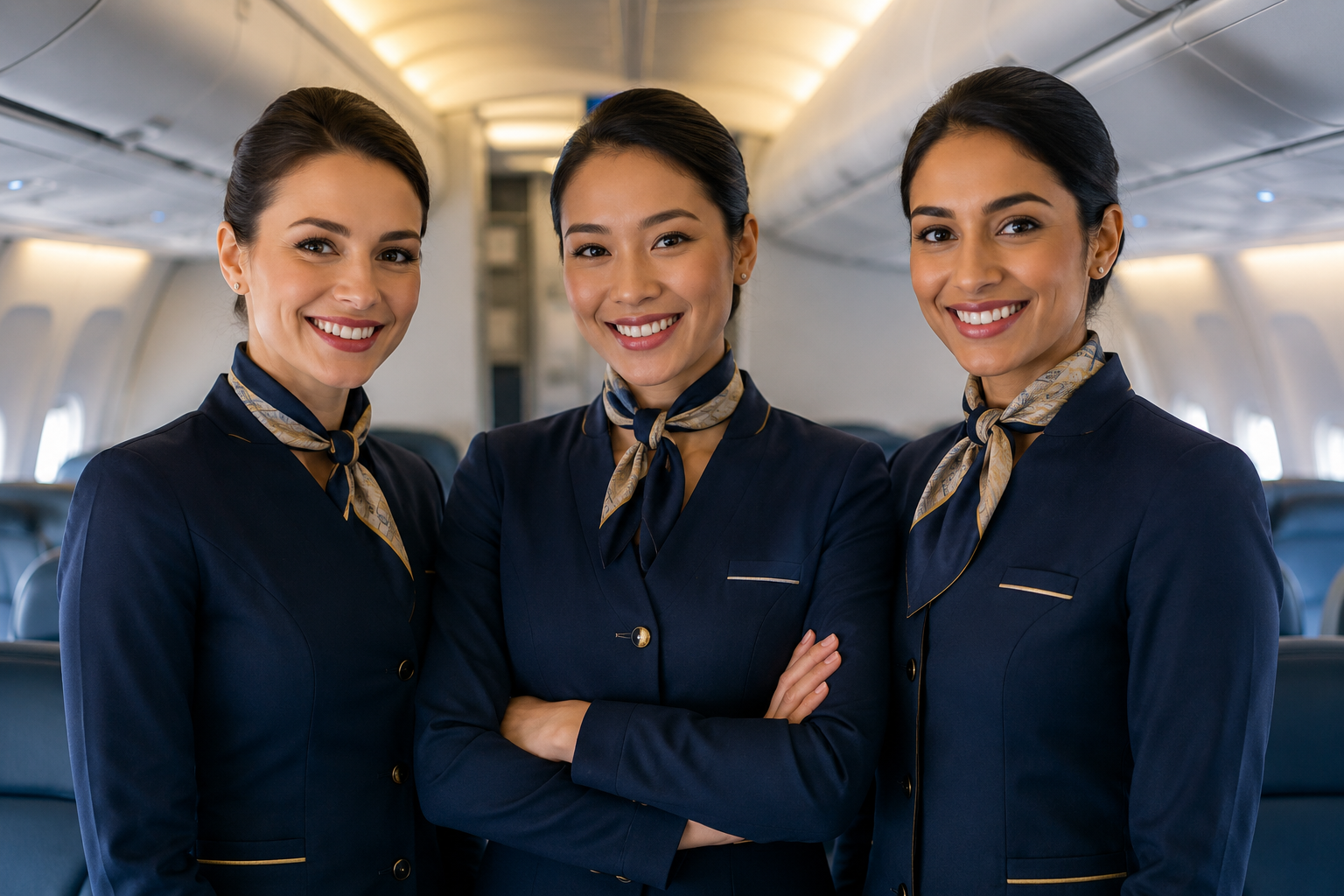
Ask someone outside the aviation industry what a cabin crew member does, and the answer is usually predictable.
"They serve meals."
"They welcome passengers."
"They demonstrate safety procedures."
"They smile."
None of these answers are wrong.
But they barely scratch the surface.
The reality is that cabin crew perform one of the most demanding multi-disciplinary roles in commercial aviation—combining safety, psychology, customer service, emergency response, operational efficiency, conflict management, and physical endurance, often within the same flight.
Unlike most professions, their workplace changes every day.
Different aircraft.
Different crew.
Different passengers.
Different countries.
Different regulations.
Different operational challenges.
Yet the expectation remains exactly the same:
Deliver a safe, efficient, and exceptional passenger experience—every single flight.
Imagine Managing a Small City at 35,000 Feet
Consider a typical Airbus A320 carrying 186 passengers.
Within that confined cabin, you'll find:
Families travelling with infants.
Elderly passengers requiring assistance.
Nervous first-time flyers.
Business travellers under pressure.
Tourists unfamiliar with the language.
Passengers with reduced mobility.
Medical conditions.
Dietary requirements.
Cultural differences.
Occasionally, disruptive or intoxicated passengers.
That's nearly 200 unique personalities sharing one enclosed environment for several hours.
Now imagine managing all of them without the option of calling external emergency services, police, or additional staff.
For the duration of the flight, the cabin crew become the primary responders.
Cabin Crew Are Customer Psychologists
Every passenger reacts differently.
One passenger becomes anxious during turbulence.
Another becomes frustrated because of a delayed departure.
Someone else is grieving.
A family struggles with a crying infant.
A passenger becomes aggressive after consuming alcohol.
None of these situations are covered by a simple script.
Cabin crew continuously read body language, tone of voice, stress levels, and behavioural cues to prevent situations from escalating.
Much of their work involves de-escalation before a problem becomes visible.
Ironically, the better they perform, the less passengers notice.
Operational Excellence Under Constant Time Pressure
Passengers often see cabin service.
Operations teams see timelines.
A typical turnaround for a low-cost carrier may be only 25–40 minutes.
Within that time, cabin crew may need to:
• Complete mandatory safety and security checks.
• Verify emergency equipment.
• Prepare the cabin.
• Coordinate with cleaning teams.
• Complete catering verification.
• Welcome passengers.
• Assist passengers requiring special assistance.
• Resolve seating issues.
• Secure overhead bins.
• Complete boarding.
• Conduct safety demonstrations.
• Ensure the aircraft is ready for departure.
Every delay affects the next activity.
Operational excellence isn't about serving meals quickly.
It's about completing dozens of safety-critical tasks accurately within strict time constraints.
Safety Is Their Primary Responsibility
Many passengers think safety demonstrations are routine.
In reality, they prepare crews for an event that every airline hopes never happens.
International certification standards require that an aircraft must be capable of being evacuated within 90 seconds using only half of its available emergency exits.
That means cabin crew must coordinate the evacuation of more than 180 passengers in conditions that may include smoke, fire, darkness, panic, or structural damage.
During an emergency there is no pause button.
Every instruction must be immediate, clear, and decisive.
The difference between hesitation and leadership may be measured in seconds.
Medical Response at 35,000 Feet
Hospitals are unavailable.
Ambulances cannot be called.
Doctors may or may not be onboard.
Cabin crew are trained to provide immediate assistance during:
Cardiac events
Fainting
Allergic reactions
Diabetic emergencies
Seizures
Choking
Severe bleeding
Childbirth
CPR
AED operation
According to industry studies, medical events occur on thousands of commercial flights globally every year, making medical preparedness an essential operational competency rather than an exceptional occurrence.
The Physical Demands Most Passengers Never Notice
An aircraft cabin is a physically demanding workplace.
During a single duty period, cabin crew may:
Walk several kilometres inside the aircraft.
Push and control meal carts weighing approximately 70–80 kg.
Lift heavy baggage into overhead bins.
Bend, twist, kneel, and reach hundreds of times.
Stand for extended periods.
Work in reduced cabin pressure and low humidity.
Adapt to changing time zones and disrupted sleep cycles.
Unlike many physically demanding professions, these tasks must be performed while maintaining composure, professionalism, and passenger confidence.
Fatigue is real.
Yet professionalism remains non-negotiable.
The Cost of Irregular Schedules
Perhaps the least visible challenge is circadian disruption.
Cabin crew don't work standard shifts.
A roster may include:
A 04:30 report on Monday.
A midnight departure on Wednesday.
A long-haul overnight flight on Friday.
A reserve duty on Sunday.
The body never fully adapts.
Meals happen at irregular times.
Sleep is fragmented.
Family events are missed.
Weekends and holidays often become ordinary working days.
Managing fatigue isn't just a lifestyle issue.
It is a safety issue.
The Human Side of Airline Operations
Cabin crew are often measured using service indicators, passenger feedback, and compliance metrics.
But those KPIs capture only part of the role.
Behind every successful flight is a team balancing operational precision with human empathy, safety with efficiency, and physical endurance with emotional resilience.
Perhaps the next evolution of airline analytics should ask new questions:
Can we measure fatigue risk more accurately?
Can AI predict workload peaks?
Can operational planning reduce unnecessary physical strain?
Can passenger sentiment help allocate crew resources more effectively?
Because understanding cabin crew isn't just about improving service.
It's about improving the safety, resilience, and sustainability of one of aviation's most demanding professions.
The Next Time You Fly...
The person serving your coffee is also trained to:
Lead an emergency evacuation.
Operate an Automated External Defibrillator.
Deliver first aid.
Manage onboard conflict.
Calm panic.
Protect the flight deck.
Coordinate emergency procedures.
And, if required, help save lives.
Perhaps it's time we stopped calling cabin crew "service staff."
They are operational professionals at the frontline of aviation safety.